


Last Updated: November 21, 2026
Quick Summary
A travel size face mist counts as a liquid under the TSA 3-1-1 rule, so the container must hold 3.4 ounces (100 milliliters) or less and fit in one clear quart-size zip-top bag, one bag per passenger. Screening checks the bottle's labeled capacity, not how much product is left inside.
- A 6 oz mist with only a little product left still fails carry-on screening.
- Decant larger bottles into containers of 3.4 oz (100 ml) or less and label them.
- Pump sprays follow the same liquid rules with no separate aerosol category.
- Checked bags have no 3.4 oz limit, but leak and pressure risks go up.
- Fill bottles no more than three-quarters full to leave room for pressure changes.
Table of Contents
- The TSA 3-1-1 Rule and Your Face Mist
- Face Mist Carry-On Size Limit: Container Size vs. Product Left Inside
- TSA Rules for Aerosol Skincare: Pump Sprays vs. Pressurized Cans
- Face Mist in Checked Baggage: What Changes
- How to Pack Face Spray for Air Travel Without Leaks
- What Happens at the Screening Checkpoint
- Choosing a Travel-Size Face Mist for Your Trip
- Frequently Asked Questions
The TSA 3-1-1 Rule and Your Face Mist
A travel size face mist counts as a liquid, so it must follow the TSA 3-1-1 rule: a container of 3.4 ounces (100 milliliters) or less, packed in one clear quart-size bag, one bag per passenger.
The 3-1-1 rule is simple to remember once you break it apart:
- 3: containers hold 3.4 oz (100 ml) or less
- 1: all liquids fit in one quart-size zip-top bag
- 1: one bag per passenger
Get one of those wrong and the item comes out of your bag at the screening checkpoint. Once the liquid limit is clear, choosing mini skin care products that fit your routine can help keep your carry-on both compliant and useful.
Does Face Mist Count as a Liquid?
Yes. Face mist is a liquid for screening purposes, even though it feels light and watery. The TSA treats mists, sprays, gels, creams, and pastes as liquids, and the container size decides whether it flies in your carry-on.
This is where many people get caught out: screening looks at the bottle, not what is left inside it, so a 6 oz mist with a thimble of product left will not pass a carry-on check.
The Quart-Size Bag Rule
Every liquid container in your carry-on has to fit inside one clear quart-size zip-top bag, one bag per passenger. The bag needs to seal and be clear so officers can see the contents without opening it.
- Use a real quart-size bag, not a gallon bag folded over
- Keep it accessible, near the top of your carry-on
- Pack one bag per person, not one per family
Face Mist Carry-On Size Limit: Container Size vs. Product Left Inside
The carry-on size limit for face mist is based on container capacity, not how much product remains. A 3.4 oz (100 ml) bottle is the ceiling for carry-on, and the label on the bottle is what matters at screening.
That distinction trips up frequent flyers. You can pour half a bottle out and it still will not pass if the bottle is marked 5 oz, because officers check capacity at a glance. Our travel size face spray bottle comparison breaks down what to look for.
What to Do When Your Bottle Is Larger Than 3.4 oz but Partly Empty
Transfer the product. That is the only reliable fix. Decant your mist into a travel-size container of 3.4 oz (100 ml) or less, label it, and pack it in your quart bag.
A few practical notes:
- Use a clean pump bottle you can refill at home
- Label the bottle so you know what is inside
- Fill it no more than three-quarters full to leave room for pressure changes
Watch out: pouring product into an unmarked bottle can cause a delay if an officer wants to know what it is. A simple label solves that in seconds.
TSA Rules for Aerosol Skincare: Pump Sprays vs. Pressurized Cans
The word "aerosol" causes more confusion at the checkpoint than almost any other term in the liquids rule. Screening depends on how the mist leaves the bottle, not the label wording.
How to Tell the Three Formats Apart
Look at the bottle, not the marketing copy. The dispenser tells you what you are dealing with.
- Pump spray. You press a plunger and a small internal pump pushes liquid through the nozzle. There is no gas inside, and the bottle does not feel pressurized. Most facial mists sold as "mists" or "sprays" are pump sprays.
- Non-aerosol mist. Often a pump or squeeze-trigger mechanism that produces a fine mist without a propellant gas. For screening, it behaves like a pump spray: a liquid in a container.
- Pressurized aerosol. The can holds the product plus a compressed or liquefied propellant gas. Shaking it produces a rattling or sloshing sound, the can feels rigid and pressurized, and the label usually carries a warning about contents under pressure or heat exposure.
A quick physical test: if the bottle has a visible dip tube running down into the liquid and a plunger you push with one finger, it is a pump. If the can is a sealed metal or rigid plastic shell with no dip tube and a continuous spray valve, it is likely a pressurized aerosol.
Why Screening Treats Them Differently
A pump spray is, for screening purposes, simply a liquid container. It falls under the same 3.4 oz (100 ml) container limit and quart-size bag requirement as your toner or serum, with no propellant and no separate category to evaluate.
A pressurized aerosol introduces two additional considerations. The container itself is under pressure, which is why aerosols carry handling guidance around heat, damage, and punctures. Some pressurized products also fall under separate hazardous-materials rules that apply to both carry-on and checked baggage, so the safe answer for any pressurized can is to verify the current guidance for that specific product rather than assume the 3-1-1 rule settles it.
| Format | What is inside | Carry-on treatment | Checked-bag treatment |
|---|---|---|---|
| Pump spray | Liquid only, manual pump | 3.4 oz (100 ml) container limit, quart bag | Generally allowed; pack to prevent leaks |
| Non-aerosol mist | Liquid only, fine-mist nozzle | 3.4 oz (100 ml) container limit, quart bag | Generally allowed; pack to prevent leaks |
| Pressurized aerosol | Liquid plus propellant gas | Container limit applies, plus current aerosol guidance | Separate pressurized/hazardous-materials guidance may apply |
The Practical Takeaway for Face Mist
If your face mist is a pump spray, you already know the answer: treat it as a liquid, keep the container at 3.4 oz (100 ml) or less, and put it in your quart bag.
If your face mist is a pressurized aerosol, do not assume the container size is the only question.
Watch out: a product labeled "continuous spray" or "fine mist" can be either format. The label wording is not a reliable guide, the dispenser mechanism is.
Face Mist in Checked Baggage: What Changes
Checked baggage is where the 3-1-1 rule stops applying, but checked face mist is not rule-free. In the cabin, the question is container size and bag capacity. In the hold, the questions become leakage, pressure, and whether the product is pressurized.
What Actually Changes
- The 3.4 oz container limit no longer applies. A full-size bottle of face mist can travel in a checked bag, and the quart-size bag requirement does not apply in the hold.
- Leak risk goes up, not down. Checked bags are handled roughly and the cargo hold sees pressure and temperature changes, so a bottle that survives a carry-on trip can still leak in checked luggage.
- Pressurized products face a separate review. A pressurized aerosol that is straightforward in the cabin may fall under different checked-baggage guidance, and airlines sometimes add their own limits.
Carry-On vs. Checked: A Side-by-Side View
| Question | Carry-on | Checked baggage |
|---|---|---|
| Container size limit | 3.4 oz (100 ml) or less | No 3.4 oz limit for liquids |
| Quart-size bag required | Yes, one per passenger | No |
| Pump-spray face mist | Allowed within size limit | Generally allowed; pack against leaks |
| Pressurized aerosol | Container limit plus current aerosol guidance | Separate pressurized/hazardous-materials guidance may apply; check airline rules |
| Main risk | Container rejected at screening | Leakage, pressure changes, carrier restrictions |
How to Pack a Full-Size Bottle for the Hold
If you are checking a larger bottle, pack it as though it will leak, because pressure changes make that a real possibility.
- Empty the bottle to no more than about three-quarters full so there is room for expansion.
- Seal the cap, then wrap cling film or tape around the neck and cap.
- Place the bottle inside a sealed zip-top bag, then inside a second bag.
- Pack it upright, wedged between soft items, with nothing sharp pressing against it.
- Keep it away from the bottom and top edges of the suitcase, where impact is most likely.
Watch out: a partly empty full-size bottle is fine in checked luggage but still fails carry-on screening, because the container's labeled capacity is what counts in the cabin. If you are packing one bottle for both legs of a trip, decant a carry-on-size portion separately rather than planning to move product between bags at the airport.
When Checking Is the Wrong Call
Checking a bag to avoid the 3.4 oz limit works for pump-spray mists and larger bottles. It is a weaker solution for pressurized aerosols, where the checked-bag rules can be more involved than the carry-on ones, and for anything you would be upset to lose to a leak.
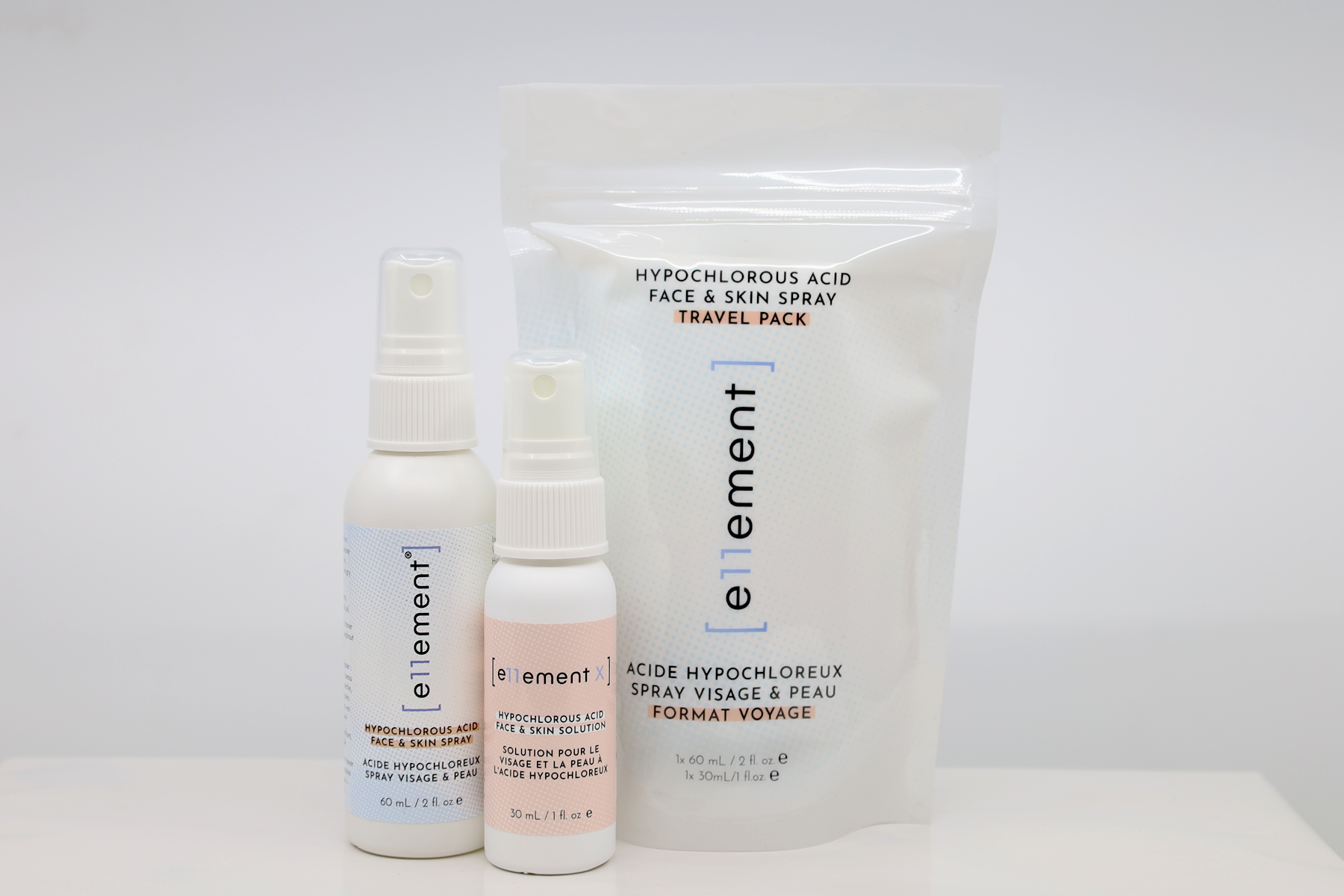
If you are checking a bag and want a compact option for the trip itself, the Hypochlorous Acid Travel Pack pairs a 2 oz bottle with a 1 oz concentrated formula, so you have a carry-on-ready size plus a backup.
How to Pack Face Spray for Air Travel Without Leaks
Leaks come from pressure changes and loose caps, not from bad luck.
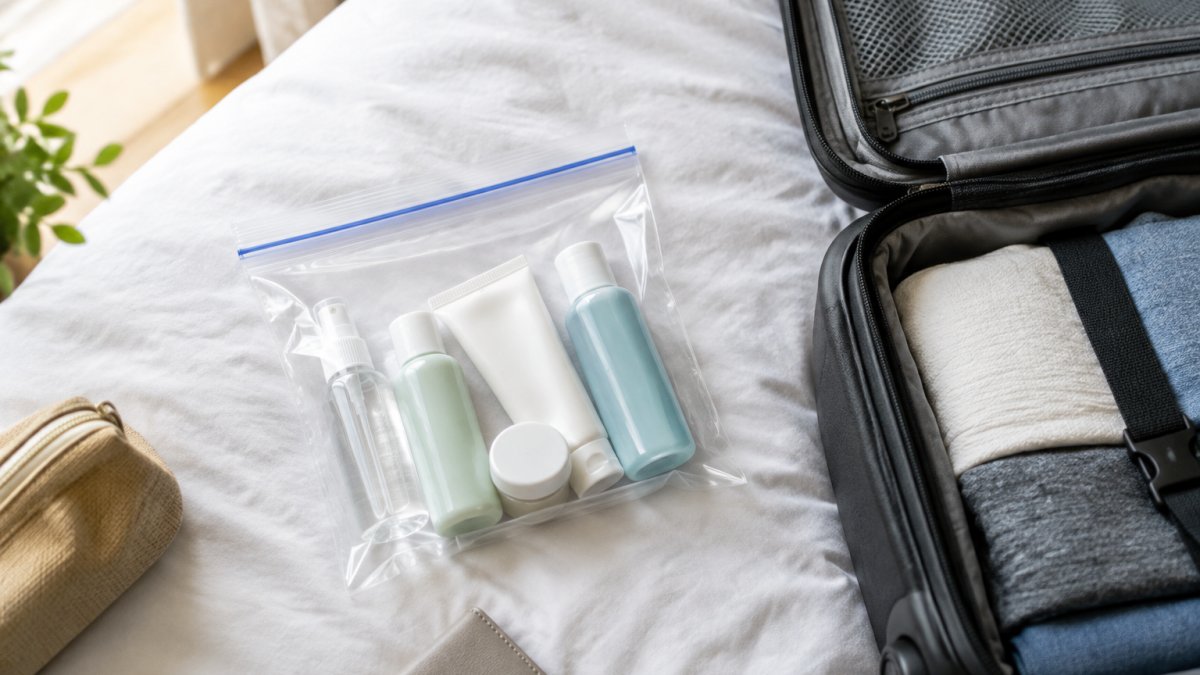
Start with the cap. Tape it shut or wrap a small piece of cling film under the lid before you screw it on.
For a full walkthrough of techniques, our guide on how to pack face spray for air travel without leaks covers the step-by-step method we recommend.
Leak-Prevention Checklist
- Cap taped or sealed with cling film
- Bottle filled to three-quarters, not to the top
- Bottle stored upright in the quart bag
What Happens at the Screening Checkpoint
At the checkpoint, your quart bag goes in a bin and through the scanner, either on its own or with your other items depending on the lane.
Stay calm and keep the bag easy to reach. If an officer flags a bottle, they are usually checking capacity, not contents.
If you are unsure whether an item passes, the safest move is to leave it out or check it.
Choosing a Travel-Size Face Mist for Your Trip
Pick a mist that is already sized for carry-on and made for the way you travel. A 2 oz pump spray fits the 3-1-1 rule without decanting, and it earns its place in the bag because you will actually use it.
Our Hypochlorous Acid Spray for Face and Skin in 60mL / 2oz is a water-based cosmetic mist made with water, sodium chloride, and hypochlorous acid, formulated without alcohol, fragrance, parabens, dyes, or oils.
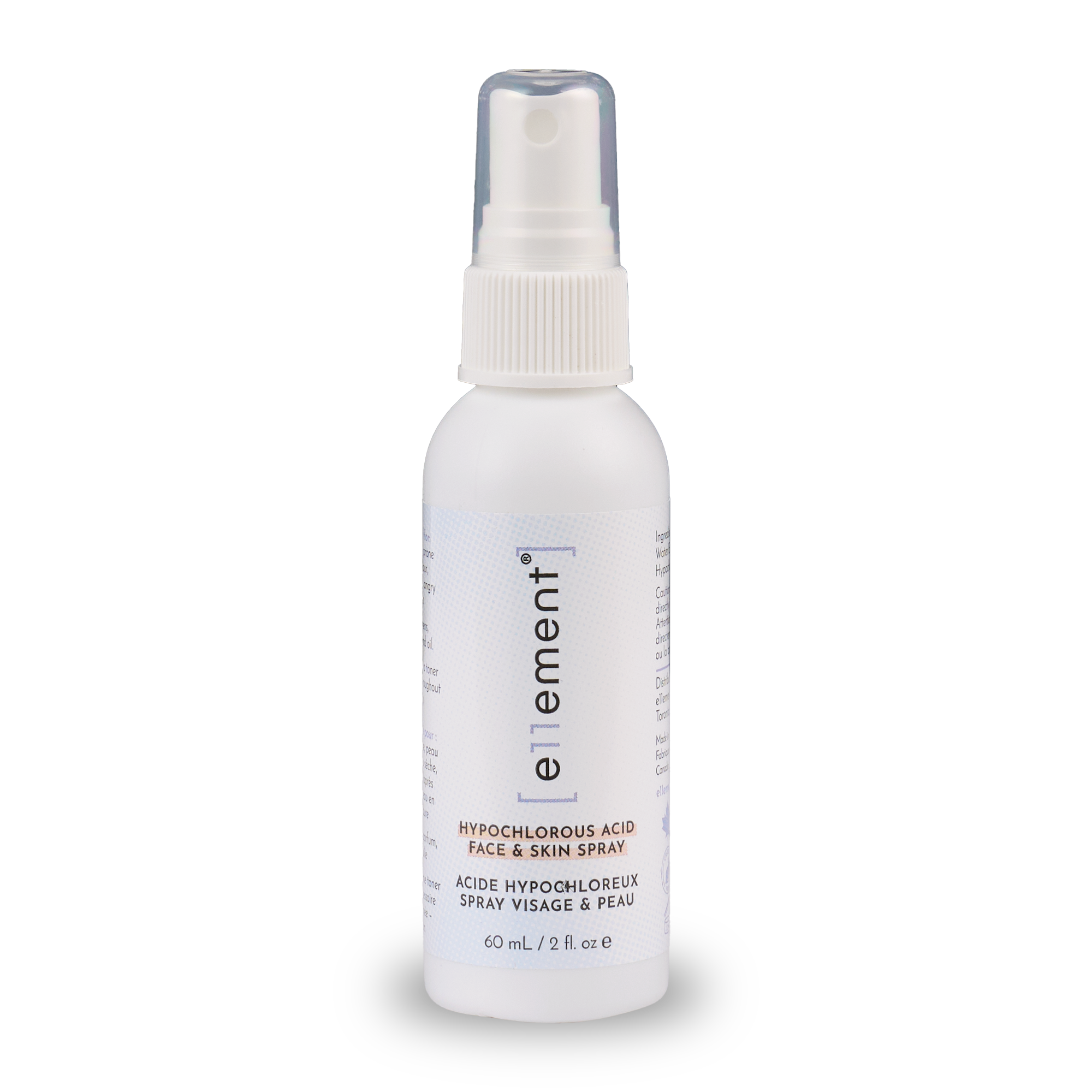
A light mist is designed for refreshing the skin after a flight, after a workout, or throughout the day, and for skin that feels dry. For readers comparing options before a trip, our guide on choosing a travel size skin mist for flights lays out the criteria that matter.
Two things to know before you buy. First, this is a cosmetic product, not a treatment, so we make no medical claims about it. Second, if you want a clear answer on what the rules allow, the official TSA screening guidance is always the final word.
Flying with skincare does not have to be a gamble.
Frequently Asked Questions
Can I bring face mist on a plane?
Yes, in most cases. A travel size face mist counts as a liquid at airport security, so it needs to be in a container of 3.4 oz (100 ml) or less and packed inside your quart-size liquids bag with your other toiletries. One bag per passenger is the standard. Check your airline's own carry-on rules before you fly, since cabin bag sizes and allowances vary by carrier and fare class.
Does a face mist need to go in the quart-size liquids bag?
Yes. A face mist is a liquid, so it belongs in the clear quart-sized zip-top bag along with shampoo, sunscreen, and makeup. Keep the bag near the top of your carry-on so you can pull it out at the screening checkpoint without unpacking everything. If you use a pump spray rather than a pressurized can, it still goes in the bag.
Can I pack face mist in my checked baggage?
Checked baggage is usually the easier route for full-size bottles. Larger face mist bottles can go in your checked suitcase, but pack them in a sealed plastic bag and wrap them in clothing to absorb leaks. Never pack a mist you cannot replace in a bag you will not see until you land.
Do aerosol face mists follow the same TSA rules as liquid sprays?
At the security checkpoint, a pressurized aerosol mist is treated as a liquid, so the 3.4 oz (100 ml) container limit and quart-bag rule apply the same way. The difference appears in checked baggage, where airlines restrict pressurized containers more strictly.


