


Quick Summary
To use hypochlorous spray after a workout, blot sweat with a clean towel, then mist your face and sweaty areas from 15 to 20 cm away and let it air dry for about a minute before moisturizing. The spray refreshes skin but does not clean it like a shower, so shower with a gentle cleanser whenever you can.
- Blot sweat first and do not scrub, since friction on warm, damp skin can worsen redness.
- Hold the bottle 15 to 20 cm away and mist the face and areas covered by sweaty clothing.
- Let the spray air dry for about a minute before applying moisturizer or sunscreen.
- Patch test on the inner forearm or neck for 24 hours before regular facial use.
- Stop using it if stinging, redness, or dryness persists, and seek care for hives or swelling.
Table of Contents
- What Hypochlorous Acid Is and Why Gym-Goers Use It
- How to Use Hypochlorous Spray After a Workout, Step by Step
- Shower First or Spray First? Setting Realistic Expectations
- Hypochlorous Acid Spray Frequency: How Often Is Too Often
- Using Hypochlorous Spray for Acne-Prone Skin After Exercise
- When to Stop Using It: Irritation, Sunscreen, and Makeup
- Building Your Post-Workout Skin Routine Around the Spray
- Frequently Asked Questions
What Hypochlorous Acid Is and Why Gym-Goers Use It
Last Updated: November 1, 2026
Hypochlorous acid (HOCl) is a compound used in skincare sprays, and gym-goers often reach for it after a sweaty session. At e11ement, we make a hypochlorous acid spray for face and skin.
The formula is simple. Our spray uses water, sodium chloride, and hypochlorous acid at 0.015%, with no alcohol, parabens, fragrance, or oils. That short ingredient list is why many people treat it as a light, everyday refresher rather than a heavy treatment.
Why do people use it after training?
- Sweat and gym equipment carry bacteria onto the face.
- A shower is not always an option right after a workout.
- Many users want something that feels clean without stripping the skin.
The research on HOCl is promising but limited. A 2018 clinical status review found that studies support antimicrobial and anti-inflammatory effects. The same review also noted that how HOCl behaves on skin depends heavily on pH and formulation stability, so results can vary between products Status Report on Topical Hypochlorous Acid, clinical relevance of specific formulations.
How to Use Hypochlorous Spray After a Workout, Step by Step
Hypochlorous acid spray works best as one step inside a complete post-workout routine, not as a standalone shortcut. The order below reflects how most practitioners sequence cleansing, spraying, moisturizing, and changing clothes so the spray supports the skin instead of sitting on top of sweat and residue.
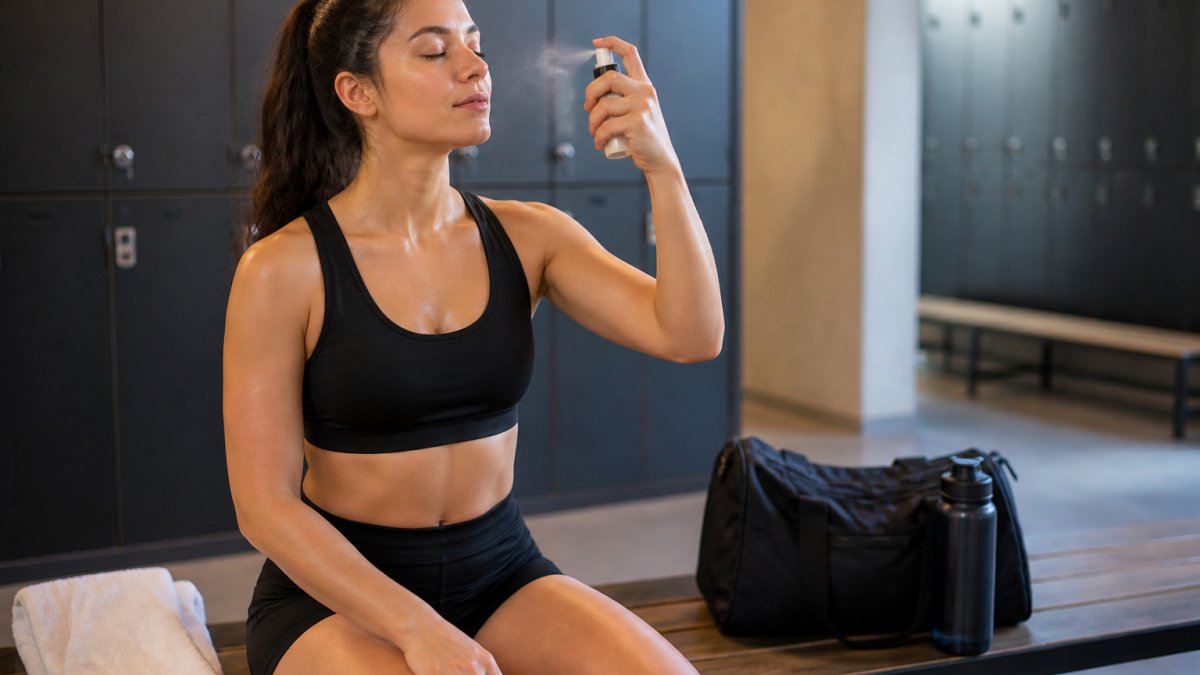
If you can shower right away:
- Cool down and blot. Finish training, cool down for a few minutes, and blot heavy sweat from your face and body with a clean towel. Do not scrub; friction on warm, damp skin can worsen redness.
- Shower with a gentle cleanser. Use lukewarm water and a mild cleanser to remove sweat, oil, sunscreen, and makeup. This step does the heavy lifting that a spray cannot do.
- Pat dry, then spray. While skin is clean and slightly damp, hold the bottle about 15 to 20 cm away and mist the face and any body areas that were covered by sweaty clothing. Let it air dry for about a minute.
- Moisturize. Apply your usual moisturizer once the spray has dried. If it is daytime, follow with sunscreen.
- Change clothes. Put on clean, dry clothing, especially around the chest, back, and groin, where sweat and friction are highest.
If a shower is not available:
- Blot first. Use a clean towel or body wipe to remove as much sweat as possible. The spray is not a cleanser, so removing surface sweat and residue first matters.
- Spray the areas that need it most. Face, neck, chest, back, and any skin folds are the priority. Hold the bottle 15 to 20 cm away and let the mist settle rather than saturating the skin.
- Air dry, then moisturize lightly. Give the spray a minute to dry before applying moisturizer or sunscreen.
- Change out of damp clothing. Swap sweaty clothes for dry ones as soon as you can, and wash or wipe down equipment you shared.
- Cleanse properly later. Treat the spray as a bridge, not a replacement. Wash with a gentle cleanser when you get to a shower.
Watch out: Do not spray over a face still covered in sweat, sunscreen, or makeup and expect it to clean the skin. The spray refreshes skin that is already fairly clean; it does not remove oil, residue, or product the way a cleanser does. For a complete option, pair it with a gentle cleanser, and our travel-size face and skin spray is small enough to keep in your gym bag.

The steps below summarise the order to follow, depending on whether a shower is available.
| Step | What to do | Timing or detail |
|---|---|---|
| Cool down and blot | Blot sweat with a clean towel, do not scrub | After a few minutes of cool down |
| Shower with gentle cleanser | Use lukewarm water and mild cleanser | Removes sweat, oil, sunscreen, makeup |
| Spray | Mist face and body areas covered by sweaty clothing | Hold bottle 15 to 20 cm away |
| Let dry | Air dry before moisturizing | About one minute |
| Moisturize and sunscreen | Apply usual moisturizer, then sunscreen by day | After spray has dried |
| Change clothes | Put on clean, dry clothing | Focus on chest, back, groin |
Shower First or Spray First? Setting Realistic Expectations
If you can shower, do it first. A shower with a gentle cleanser removes sweat, oil, and debris more thoroughly than a spray. Spraying afterward then adds a refreshing, comfortable finish.
If you cannot shower, a spray can bridge the gap. Expect it to refresh the skin rather than deep clean it. That distinction matters, because a spray used as a shortcut can leave residue behind.
Many gym-goers do both. They spray after the workout to freshen up, then shower later that day.
Hypochlorous Acid Spray Frequency: How Often Is Too Often
Our face and skin spray is designed for daily routines.
Frequency still depends on your skin. If your skin feels tight, stings, or looks red after a few uses, cut back. Daily use is common, but more is not always better.
For travelers and frequent gym-goers, a travel pack makes it easy to keep a spray on hand without carrying a full bottle.
Hypochlorous Acid Spray for Face and Skin - 60mL / 2oz →

Using Hypochlorous Spray for Acne-Prone Skin After Exercise
The spray is designed to fit into a routine. Pair it with the cleanser and treatment your skin already tolerates, and watch how your skin responds over several weeks.
A common mistake is spraying so often that the skin feels dry or irritated. Start with one use after exercise and adjust from there.
When to Stop Using It: Irritation, Sunscreen, and Makeup
The way you use it matters. This section covers the safety details most post-workout guides skip: patch testing, areas to avoid, reactions that warrant stopping, and how formulation and storage affect what you are spraying.
Patch test before regular use. Apply a small amount to a discreet area such as the inner forearm or the side of the neck, let it dry, and watch for 24 hours. If you have sensitive skin, eczema, or a history of reactions to skincare products, repeat the test on a second day before spraying your face.
Keep it away from eyes and mucous membranes. Close your eyes and mouth when misting the face, and do not spray directly toward the eyes, nostrils, or lips. If the spray gets into your eyes, rinse with clean water. Do not use it inside the ear canal or on broken, cracked, or recently shaved skin without checking with a clinician first. Maintaining this level of caution ensures that your skin remains calm and irritation-free while you transition from your cooling mist to applying eco-friendly deodorants for workouts.
Stop using it if you notice:
- Persistent stinging or burning that does not settle within a few minutes
- New or worsening redness, itching, or swelling
- Dryness or tightness that continues after moisturizing
- A rash that spreads or does not improve after a few days
If symptoms persist or you develop hives, facial swelling, or difficulty breathing, stop use and seek medical care. Persistent skin symptoms, recurring post-workout breakouts, or signs of infection such as spreading redness, warmth, or pus need professional assessment rather than more spray.
Sunscreen and makeup. Let the spray dry completely before applying sunscreen or makeup; damp skin can make products pill or slide. Remember that the spray does not replace sun protection, and it does not remove sunscreen or makeup at the end of the day. Cleanse first, then spray if you want the refreshing step.
Concentration, formulation, and storage. Not all hypochlorous sprays are interchangeable. Keep the bottle closed, store it away from direct heat and sunlight, and do not use it past its date or if the smell or color changes. A spray that has degraded or been stored poorly may not behave the way the label promises.
The spray can fit into a post-workout routine. Pair it with proper cleansing and moisturizing, and treat any persistent reaction as a signal to stop and get advice.
Building Your Post-Workout Skin Routine Around the Spray
A simple routine looks like this:
- Right after training: Wipe sweat, then spray and air dry.
- After showering: Apply moisturizer and sunscreen as needed.
- Evening: Cleanse gently and skip the spray if your skin feels tired.
The spray works best as one step among several. It refreshes between workouts, while your cleanser and moisturizer do the heavy lifting. Our travel-size option lets you keep this routine going on the road.

Hypochlorous spray is a convenient, gentle way to freshen up after exercise. Use it as part of a routine, watch how your skin responds, and pair it with proper washing when you can.
Frequently Asked Questions
Is hypochlorous acid good to use after a workout?
It can be a useful refresher after exercise, especially when a shower is not immediately available. A spray is best treated as a temporary option for freshening up. Wash or shower as soon as practical, since a mist is not established to remove sweat and residue as thoroughly as washing.
Can hypochlorous spray replace washing your face after a workout?
No. A spray is a temporary option when a shower is unavailable, not a replacement for cleansing. If you can wash, do so after training. If you cannot, spray the face and then cleanse properly once you have access to water.
How often can you use hypochlorous acid spray for acne-prone skin?
Start with once daily and watch your skin for stinging, dryness, or new redness over the first week. If irritation appears, reduce use or stop. Because skin response varies, a patch test on a small area before full-face use is a sensible first step.
Should you rinse off sweat before using hypochlorous spray?
Where possible, yes. Wiping away heavy sweat with a clean towel or rinsing with water first lets the spray reach cleaner skin and reduces the residue it has to deal with. Then mist the face, let it air dry, and apply any moisturizer or sunscreen afterward. If you cannot rinse, a quick spray still refreshes the skin, but it is not a substitute for a proper wash later.


