


Table of Contents
- How Hypochlorous Acid Helps Rosacea: An Evidence-Based Guide
- What Hypochlorous Acid Is and How It Works
- Hypochlorous Acid and Rosacea: What the Evidence Says
- Hypochlorous Acid Spray for Sensitive Skin
- How to Use Hypochlorous Acid Spray on Your Face
- Building a Rosacea Skincare Routine Around Your Treatment
- Hypochlorous Acid Side Effects and What to Watch For
- Next Step: Test a Small Routine and Review It With Your Dermatologist
- Frequently Asked Questions
How Hypochlorous Acid Helps Rosacea: An Evidence-Based Guide
Last Updated: October 30, 2026
What Hypochlorous Acid Is and How It Works
Hypochlorous acid is a compound that occurs naturally in the body. At e11ement, we formulate it as a gentle, water-based skincare spray, which makes the question of how hypochlorous acid helps rosacea a fair one to ask. The honest answer is that the laboratory evidence is promising, while the clinical evidence for rosacea specifically is still thin.
Hypochlorous acid (HOCl) is a weak acid formed when chlorine dissolves in water.
A 2018 status report by JQ Del Rosso describes laboratory evidence that topical hypochlorous acid has anti-inflammatory and immunomodulatory properties (Status Report on Topical Hypochlorous Acid: Clinical Considerations for Use in Dermatology). Those properties are the reason it attracts interest for irritation-prone skin. A dermatology review from 2024 likewise discusses hypochlorous acid for infection prevention, wound care, scar management, and inflammatory modulation (Hypochlorous Acid: Applications in Dermatology).
Lab findings do not automatically translate into a clinical result on your face, so keep that distinction in mind as you read. Our guide to hypochlorous acid and the skin barrier for sensitive skin explains how the evidence applies to reactive skin.
Hypochlorous Acid and Rosacea: What the Evidence Says
Rosacea is a chronic inflammatory condition marked by redness, flushing, and irritation, and it is easy to see why a calming spray draws attention. The honest summary is that hypochlorous acid has a plausible mechanism, but it does not have a robust body of human clinical trials in rosacea specifically. Separating those layers is the key to reading claims about it sensibly.
Layer 1: Laboratory and mechanistic evidence. A 2018 status report by JQ Del Rosso describes laboratory evidence that topical hypochlorous acid has anti-inflammatory and immunomodulatory properties (Status Report on Topical Hypochlorous Acid: Clinical Considerations for Use in Dermatology). A 2024 dermatology review likewise discusses hypochlorous acid for infection prevention, wound care, scar management, and inflammatory modulation (Hypochlorous Acid: Applications in Dermatology). These findings are not rosacea trials.
Layer 2: General skin-care and wound-care evidence. Much of the clinical literature on hypochlorous acid comes from wound cleansing, pre-procedural skin preparation, and eyelid hygiene, where it is used to reduce microbial load and calm irritated tissue. It does not establish that it reduces rosacea flares.
Layer 3: Human rosacea-specific evidence. This is the thinnest layer. Dermatology commentary has noted that the proposed use is mechanistically plausible for rosacea and seborrheic dermatitis, but that dedicated evidence is currently lacking (Social Media Mythbusters: Hypochlorous Acid Sprays). One clinical commentary goes further, stating that hypochlorous acid should not be presented as a cure for rosacea and noting it may support gentle skin hygiene and some irritation-prone routines (Hypochlorous Acid Skincare: Safety & Uses).
Why Rosacea Subtypes Matter for Results
Rosacea is not one condition with one appearance, and the evidence gap looks different depending on your main symptom:
- Persistent redness (erythematotelangiectatic pattern): the main complaint is background redness and visible vessels. A soothing mist may temporarily calm the sensation of heat or stinging; visible vessels are a clinical concern to discuss with a clinician.
- Flushing: episodes are often triggered by heat, sun, spicy food, alcohol, or stress. Trigger management and prescribed therapy are central to managing flushing.
- Papules and pustules (papulopustular pattern): these bumps are inflammatory and are usually treated with prescription topical or oral therapy. A spray may sit alongside that routine, but it is not a substitute for it.
- Ocular rosacea: eye involvement, dryness, grittiness, redness of the lids, needs assessment by a clinician. Eye symptoms should be discussed with a doctor rather than self-treated with a facial spray.
For this reason, track your own pattern before judging results. Note whether your main complaint is redness, stinging, dryness, or breakouts, and assess the spray against that specific symptom rather than against a vague idea of 'better skin.'
Hypochlorous Acid Spray for Sensitive Skin
The e11ement Hypochlorous Acid Spray for Face and Skin is formulated without alcohol, parabens, added fragrance, gluten, dyes, or oils. Its listed ingredients are water, sodium chloride, and hypochlorous acid at 0.015%. It is designed for a wide range of skin types and is intended for external cosmetic use.
If you want to test the formula before committing, the 60mL trial size is the easiest entry point, while the 240mL bottle suits daily use. Readers who prefer a middle option can compare the 120mL size.


How to Use Hypochlorous Acid Spray on Your Face
Spray onto clean skin, then allow it to air dry before applying any other products. Avoid rubbing the skin dry with a towel, since that adds friction to already reactive skin.
- Cleanse gently with a fragrance-free cleanser and pat dry.
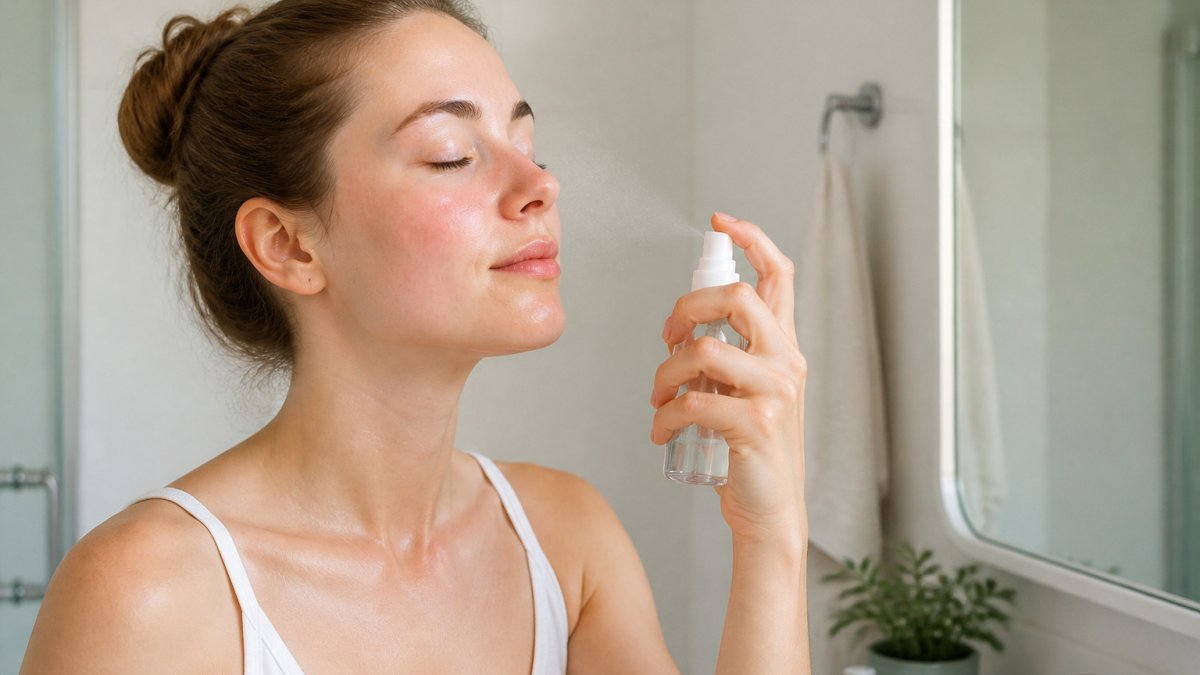
- Hold the bottle about a hand's length away and mist the face evenly.
- Let it air dry for about 30 seconds.
- Follow with your usual moisturizer, and any prescribed treatment as directed.
A common mistake is layering it under heavy products too quickly. Give it a moment to dry, then continue your routine.
Building a Rosacea Skincare Routine Around Your Treatment
If you already use a prescribed rosacea treatment, the spray should slot around it rather than replace it. Keeping the routine short and changing one thing at a time can help you tell what is helping and what is irritating. The guidance below is general and does not override your prescriber's instructions.
Hypochlorous Acid Spray for Face and Skin - 240mL / 8oz →
Sequencing with prescription therapy
A common pattern is:
- Cleanse with a gentle, fragrance-free cleanser and pat dry.
- Mist the hypochlorous acid spray and let it air dry for about 30 seconds.
- Apply prescribed treatment as directed by your clinician.
- Moisturize to support the skin barrier.
Some prescription topicals can sting on damp or broken skin. If your prescription stings when layered over the spray, ask your prescriber or pharmacist whether to apply the prescription first, wait longer between steps, or use the spray at a different time of day. Do not change the dose or frequency of a prescription on your own.
Patch testing before full-face use
Before misting your whole face, test on a small area:
- Apply to a small patch on the jawline or inner forearm once daily for 2-3 days.
- Watch for stinging, burning, swelling, or a rash.
- If the patch is calm, begin full-face use every other day, then increase if tolerated.
Tracking tolerance and response
Set realistic expectations. A soothing mist may improve the sensation of tightness or heat within days, but it is not expected to clear persistent redness or bumps. A simple tracking method:
- Note your main symptom (redness, stinging, dryness, or bumps) on a 0-10 scale each evening.
- Record any new products, triggers, or prescription changes.
- Review the notes after 2-4 weeks rather than day to day.
When to stop and seek advice
Stop using the spray and contact a clinician if you notice:
- Increasing stinging, burning, swelling, or a rash.
- New or worsening bumps, or spreading redness.
- Eye symptoms such as grittiness, dryness, or lid redness.
- No improvement, or worsening, after a few weeks of consistent use.
Bring your tracking notes to your dermatologist so they can judge whether hypochlorous acid fits your plan, and so any change to your prescription is made with their input, not in place of it.
The table below summarises the layered evidence for hypochlorous acid and rosacea, so you can see how strong each level of support is.
| Evidence layer | What it shows | Strength for rosacea |
|---|---|---|
| Laboratory and mechanistic | Anti-inflammatory and immunomodulatory properties | Plausible, not rosacea trials |
| General skin and wound care | Reduces microbial load, calms irritated tissue | Indirect |
| Human rosacea-specific | Dedicated evidence currently lacking | Thinnest layer |
Hypochlorous Acid Side Effects and What to Watch For
Most people tolerate hypochlorous acid well, but reactive skin can respond to any new product. Stop use and speak with a dermatologist if you notice increased stinging, burning, swelling, or a rash, or if your rosacea symptoms worsen. Do not stop prescribed treatment without medical advice.
Next Step: Test a Small Routine and Review It With Your Dermatologist
Start with a single, short routine for a few weeks, and track your redness and irritation. Bring those notes to your dermatologist so they can judge whether hypochlorous acid fits your plan.
Frequently Asked Questions
Can hypochlorous acid help rosacea?
Hypochlorous acid is a gentle, fragrance-free spray that can refresh the skin. Laboratory work has reported anti-inflammatory and immunomodulatory properties, and a 2018 status report on topical use discusses this. However, dedicated clinical evidence for treating rosacea specifically is limited. Dermatology Times notes the use is mechanistically plausible but lacks dedicated studies. It should be treated as a supportive step alongside, not instead of, any prescribed rosacea treatment.
Is hypochlorous acid spray safe for sensitive skin?
Hypochlorous acid spray is generally formulated for sensitive skin. The e11ement Face and Skin Spray contains only water, sodium chloride and hypochlorous acid at 0.015%, and is free of alcohol, parabens, added fragrance, dyes and oils. No product is risk-free for everyone. Patch test on a small area of skin for a few days before using it across your face, especially if your skin reacts easily.
How do you use hypochlorous acid spray for rosacea?
Spray the mist onto clean skin, then let it air dry before applying any other products. The right frequency depends on how your skin responds. Keep the spray away from the eyes and avoid rubbing it in. If your skin stings, feels tight, or flushes after use, stop and reassess. Pair it with a gentle moisturizer and sunscreen as part of a consistent routine.
What are the side effects of hypochlorous acid?
Reactions can vary between individuals, and any new product may cause stinging or irritation on reactive skin. Stop using the product and consult a dermatologist if you notice swelling, blistering, worsening rash, or a flare that lasts longer than a day or two. Avoid using it on open wounds unless a healthcare professional advises it, and never use it as a replacement for prescribed rosacea medication.
Can hypochlorous acid replace rosacea medication?
No. Hypochlorous acid is a cosmetic refreshing spray, not a prescription treatment, and the available evidence does not show it can replace medications such as topical or oral rosacea therapies. Continue any treatment your dermatologist prescribed and use the spray as an additional, gentle step if it suits your skin. Discuss any changes to your regimen with your doctor before stopping or reducing prescribed care.


