


Last Updated: October 28, 2026
Quick Summary
An alcohol-free facial cleansing spray is a mist that cleanses without drying solvents like ethanol, which can strip surface oils and leave skin feeling tight. Choose one by checking the ingredient list, not just the label, and start with a small size to patch-test before committing to a larger bottle.
- Alcohol-free means no drying alcohols like ethanol or denatured alcohol; fatty alcohols like cetyl alcohol may still appear.
- Mist 6-8 inches from the face with eyes closed, then let it air dry for 30-60 seconds.
- Patch test on the inner forearm or jawline and wait 24 hours before full-face use.
- The 2oz spray costs $12.49, while the 8oz spray costs $18.95 and offers better value per ounce.
- Apply sunscreen as the last step in the morning, since a cleansing spray does not replace it.
Table of Contents
- Why Alcohol-Free Matters in a Facial Cleansing Spray
- Cleansing Spray or Hydrating Face Mist: How to Tell the Difference
- How We Compared the e11ement Hypochlorous Acid Sprays
- The 7 e11ement Facial Sprays Compared by Size, Price and Use
- Facial Spray Ingredients to Avoid and How to Read the Label
- How to Use a Hypochlorous Acid Spray Without Irritating Your Skin
- Choosing Your Facial Cleansing Spray for Sensitive Skin
- Pick Your Size and Start Your Trial Spray Routine
- Frequently Asked Questions
Alcohol-free facial cleansing sprays have moved from niche to mainstream, and the reason is simple: many people's skin reacts badly to drying solvents. The global facial cleanser market is projected to grow from USD 14.7 billion in 2025 to USD 25.6 billion by 2035, according to Market.us facial cleanser market forecast. That growth reflects a crowded shelf, which makes choosing carefully more important than ever.
At e11ement, we formulate our hypochlorous acid sprays without alcohol, parabens, added fragrance, gluten, dyes, or oils. The reasoning matters more than the label, so this guide explains what alcohol-free should mean in practice and how to compare the seven e11ement facial sprays on size, price and use.
Why Alcohol-Free Matters in a Facial Cleansing Spray
A facial spray is a liquid you mist onto skin. Alcohol-free matters because alcohol can strip natural surface oils, leaving skin feeling tight.
Not every alcohol-free product is automatically the better choice, though. The Derm Specs analysis of alcohol-free skincare questions whether alcohol-free is always preferable, and the evidence for comparative benefit is limited. Treat alcohol-free as a starting filter, not a guarantee.
Cleansing Spray or Hydrating Face Mist: How to Tell the Difference
Many shoppers use these terms interchangeably. A hydrating face mist focuses on adding a sense of moisture and comfort.
Check the ingredient list and the directions. Cleansing sprays usually instruct you to mist, wait, and air dry before applying other products. Mists are often used over makeup or during the day. Neither label guarantees results, so read the product's own claims.
How We Compared the e11ement Hypochlorous Acid Sprays
We compared the seven e11ement products on four criteria: size, starting price, ingredient simplicity, and intended use. Each product's ingredient list is water, sodium chloride and hypochlorous acid, with concentration varying by product line.
The 2oz spray is $12.49, while the 8oz spray is $18.95.
The 7 e11ement Facial Sprays Compared by Size, Price and Use
| Product | Starting Price | Best For |
|---|---|---|
| Hypochlorous Acid Spray for Face and Skin | $12.49 | Trying the spray first |
| Hypochlorous Acid Spray for Face and Skin | $15.99 | Mid-sized daily use |
| Hypochlorous Acid Spray for Face and Skin | $18.95 | Lowest cost per ounce |
| Hypochlorous Acid - e11ement X Concentrated | $17.99 | Targeted spot use |
| Hypochlorous Acid - Starter Pack | $29.99 | A trial routine |
| Hypochlorous Acid - Travel Pack | $17.99 | Carrying on the go |
| Hypochlorous Acid - New Feature Pack Plus | $36.99 | Testing the full range |
Pros and cons
- 8oz spray: Best value per ounce. Cons: a larger upfront cost and more product than a new user may need.
- 2oz spray: Lowest entry price. Cons: runs out quickly with daily use.
- e11ement X Concentrated: Designed for targeted use. Cons: intended as a spot product, not an all-over mist.
The e11ement X listing describes it as a more concentrated cosmetic formula for targeted use.
You can choose the anchor words 8oz spray or the anchor words 2oz size.


Facial Spray Ingredients to Avoid and How to Read the Label
An "alcohol-free" label tells you one thing: the formula does not contain ethanol or a related drying solvent. It does not tell you the product is gentle, non-comedogenic, or suitable for your skin. Reading the ingredient list yourself is the only way to know what you are misting on.
Drying alcohols vs. fatty alcohols
The word "alcohol" covers two very different chemical families, and only one is the one you are trying to avoid in a cleansing spray.
- Drying (short-chain) alcohols: ethanol, denatured alcohol, alcohol denat., isopropyl alcohol, SD alcohol. These evaporate quickly, can strip surface oils, and are the reason many people seek alcohol-free formulas. In a leave-on mist, they are the ingredients most likely to leave skin feeling tight.
- Fatty (long-chain) alcohols: cetyl alcohol, stearyl alcohol, cetearyl alcohol, behenyl alcohol, and lanolin alcohol. These are waxy solids used as emollients and thickeners. They are not drying in the way ethanol is, and many sensitive-skin formulas include them deliberately.
A product can be honestly labeled "alcohol-free" and still contain cetyl alcohol, because the label claim usually refers to the drying type. That is not deceptive, it is a terminology gap that catches shoppers off guard. If your concern is dryness and stripping, scan for the short-chain names, not the fatty ones.
What else to scan for in a facial cleansing spray
-
Fragrance and parfum: check the ingredient list if you want to know whether a product contains them.
-
Essential oils: check the ingredient list if you want to know whether a product contains them.
-
Dyes and colorants: check the ingredient list if you want to know whether a product contains them.
-
Surfactants: if the product is marketed as a cleanser, look for a mild surfactant (e.g., coco-glucoside, decyl glucoside). A spray with no surfactant is a refresher, not a cleanser.
How to read the list in order
Ingredients are listed by weight down to 1%, after which order is not strictly meaningful. In practice:
- Water (aqua) is almost always first in a spray. If it is not, the product is likely oil-based or a concentrate.
- The active comes next. In e11ement's standard sprays, hypochlorous acid is listed at 0.015%; the e11ement X line is listed at a higher strength. Match the concentration to the job, a full-face mist and a targeted spot product are not interchangeable.
- Anything after the 1% mark may appear in any order, so a "hero" botanical near the end of the list is likely present in trace amounts.
A short ingredient list does not guarantee tolerance.
How to Use a Hypochlorous Acid Spray Without Irritating Your Skin
A hypochlorous acid spray is a leave-on cosmetic mist, not a rinse-off cleanser. How you layer it, how often you use it, and where you avoid spraying matter more than the mist itself.
Step-by-step application
-
Start with clean skin. The Face and Skin Spray directions say to spray onto clean skin.
-
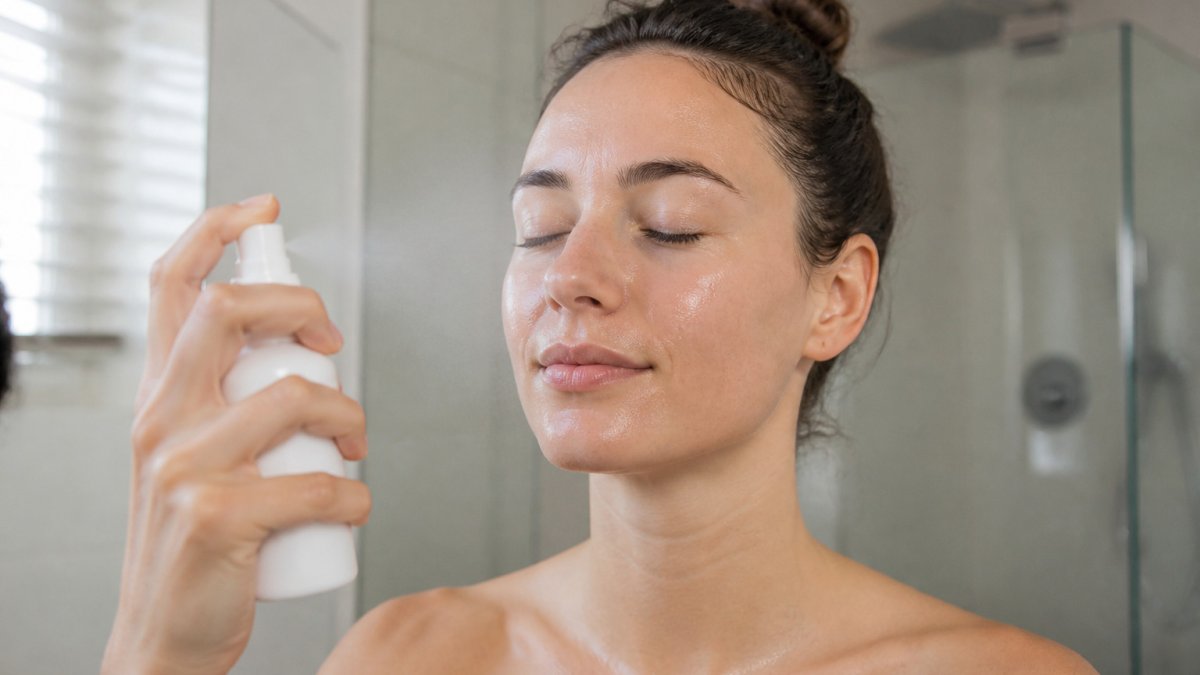
Mist 6-8 inches from the face, eyes closed, moving from forehead to chin. Two to three pumps is usually enough for the full face.
-
Let it air dry for 30-60 seconds. Do not rub it in. The point is contact with the skin surface, and rubbing wastes product and can irritate reactive skin.
-
Apply sunscreen in the morning as the last step. A cleansing spray is not a sunscreen and does not replace one.
How often to use it
The Face and Skin Spray can be used as part of a daily skincare routine, including for refreshing skin after workouts or throughout the day.
No-rinse vs. rinse-off
The Face and Skin Spray directions say to allow it to air dry before applying additional products.
Eye-area and sensitive-zone precautions
- Keep eyes closed during misting and avoid spraying directly toward the eye area.
- Do not spray into the nostrils or ears.
- For the eye contour, mist onto a cotton pad first and swipe gently, this gives you control that a direct spray does not.
- Broken skin, active rashes, or post-procedure skin: ask a clinician before use. Hypochlorous acid is generally well tolerated, but compromised skin is a different situation.
Storage and packaging hygiene
- Keep the cap on when not in use and store away from direct sunlight and heat.
- Do not decant into an unsterile bottle; hypochlorous acid is sensitive to contamination and to prolonged light exposure.
- Check the expiry or period-after-opening date on the bottle. A spray that smells strongly of chlorine or has changed color should be discarded.
- Wipe the nozzle occasionally with a clean tissue to prevent residue buildup.
Patch testing first
Before full-face use, mist a small area on the inner forearm or along the jawline and wait 24 hours. If there is no reaction, proceed to the face. This is especially worth doing if you have a history of eczema, rosacea, or reactions to other mists.
Choosing Your Facial Cleansing Spray for Sensitive Skin
If your skin is sensitive, start with the smallest size and patch-test on a small area first. Choose a product labeled gentle and free of fragrance and dyes.
Our listings describe the spray as suitable for sensitive skin types.
Pick Your Size and Start Your Trial Spray Routine
Start with a small size to test tolerance, then move to the 8oz bottle if the spray suits you. The anchor words Starter Pack pairs the 8oz and 2oz sizes, while the anchor words Travel Pack suits people who need the spray away from home.

The Face and Skin Spray can be used for refreshing skin after workouts or throughout the day.
Frequently Asked Questions
What is an alcohol-free facial cleansing spray?
An alcohol-free facial spray is a mist formulated without alcohol. e11ement's Hypochlorous Acid Spray for Face and Skin is formulated without alcohol, parabens, added fragrance, gluten, dyes or oils. Its listed ingredients are water, sodium chloride and hypochlorous acid at 0.015%. It is designed to be sprayed onto clean skin and left to air dry before other products.
Can an alcohol-free facial spray replace a face wash?
e11ement's listings do not claim that its sprays replace a face wash. The Face and Skin Spray is described for refreshing skin after workouts or throughout the day.
What does hypochlorous acid facial spray do?
e11ement's listings describe its Face and Skin Spray as suitable for refreshing skin after workouts or throughout the day, hydrating dry-feeling skin, and supporting a clean, refreshed complexion. Hypochlorous acid is listed at 0.015% in the regular Face and Skin Spray. The e11ement X listing describes a more concentrated cosmetic formula for targeted use.
Is hypochlorous acid spray suitable for sensitive skin?
e11ement describes its Face and Skin Spray as gentle and designed for a wide range of skin types, including sensitive skin. The Face and Skin Spray is formulated without alcohol, added fragrance, parabens, dyes and oils.


