


Last Updated: November 26, 2026
Quick Summary
Face spray before or after moisturizer both work, but the order changes what the spray does. Applied to clean, damp skin before moisturizer, a face spray adds hydration that moisturizer helps hold in place; applied after moisturizer, it adds a light refresh on top.
- Use face mist after cleansing and before moisturizer for a hydration boost, then again later as a refresh.
- Mist onto damp skin, then follow with serum and moisturizer while skin still feels slightly damp.
- Hold the bottle 15 to 20 centimetres away and mist in two to three slow sweeps.
- A face spray is not a setting spray, which is formulated to lock makeup in place.
- e11ement face sprays use water, salt, and hypochlorous acid at a pH of 7.5, alcohol-free and fragrance-free.
Table of Contents
- Face Spray Before or After Moisturizer: The Short Answer
- When to Use Face Mist in Your Skincare Routine
- Face Mist Before or After Serum: Where It Fits
- Should You Moisturize After Face Mist?
- Can You Use Face Spray Over Makeup?
- How to Apply Face Spray for the Best Result
- Choosing a Face Spray That Fits Your Routine
- Frequently Asked Questions
Face Spray Before or After Moisturizer: The Short Answer
The short answer: face spray before or after moisturizer both work, but the order changes what the spray does. Applied to clean, damp skin before moisturizer, a face spray adds a layer of hydration that moisturizer then helps hold in place.
The right order depends on your formula, your skin type, and what you want the spray to do.
The global face-mists market is valued at USD 264.2 million in 2026 and is projected to reach USD 442.8 million by 2036, according to Future Market Insights' face-mists market analysis. That growth says plenty of people are adding a mist to their routine. Fewer know where it belongs.
Below, we break down the order, the exceptions, and the mistakes that leave skin feeling tighter instead of softer.
When to Use Face Mist in Your Skincare Routine
Use face mist after cleansing and before moisturizer for a hydration boost. Use it again later in the day as a refresh. Those are two different jobs, and the same bottle can do both.
Charlotte Tilbury places face mist before moisturizer in a standard routine, while noting it can also go on afterward for extra hydration (Charlotte Tilbury's face mist guidance). That flexibility is the honest answer. Order matters less than what you do next.
Here is where a mist fits in a basic routine:
- Cleanse
- Mist onto damp skin
- Apply serum or treatment
- Apply moisturizer
- Mist again later if skin feels tight
Mist on Damp Skin After Cleansing
Damp skin is the best moment for a mist. After cleansing, skin holds onto water.
Wait too long and skin dries down. Then the mist sits on the surface instead of sinking in with the rest of your routine.
This is also the point where a water-based spray works best as skin prep. It gives serum and moisturizer a damp base to spread over.
A Midday Reset and Post-Workout Step
A midday mist is a different move. It can refresh skin and add a little moisture without a full routine.
Post-workout is one common use for a spray. A light mist over clean skin can help skin feel refreshed before you moisturize.
Face Mist Before or After Serum: Where It Fits
Face mist goes before serum in most routines.
The logic is simple: thin to thick. A water-based mist under a serum gives the serum a damp surface to spread across.
There are exceptions. Some toner-like mists are designed to go on after cleansing as a treatment step, and some finishing mists go last.
Our rule of thumb: if the mist is mostly water, put it before serum.
Should You Moisturize After Face Mist?
Yes, moisturize after face mist in almost every case. A mist adds water to skin. Moisturizer helps keep that water from evaporating away.
Skip the moisturizer and the mist can dry down and leave skin feeling tighter than before. Water alone evaporates.
One 2021 study in PubMed Central on moisturizer application timing compared applying moisturizer right after bathing with waiting 90 minutes.
So the sequence is mist, then moisturizer, not mist alone.
Can You Use Face Spray Over Makeup?
Yes, you can use face spray over makeup. A fine mist adds moisture and a fresh feel without disturbing most makeup.
Hold the bottle further back and mist once.
One caution: a face spray is not a setting spray. Setting sprays are formulated to lock makeup in place.
We cover this distinction in more depth in our guide to HOCl face spray vs setting spray, including ingredients and how to use each.
How to Apply Face Spray for the Best Result
Application technique matters as much as order. A good mist covers skin evenly in a light layer. A bad one leaves droplets that evaporate and dry skin out.
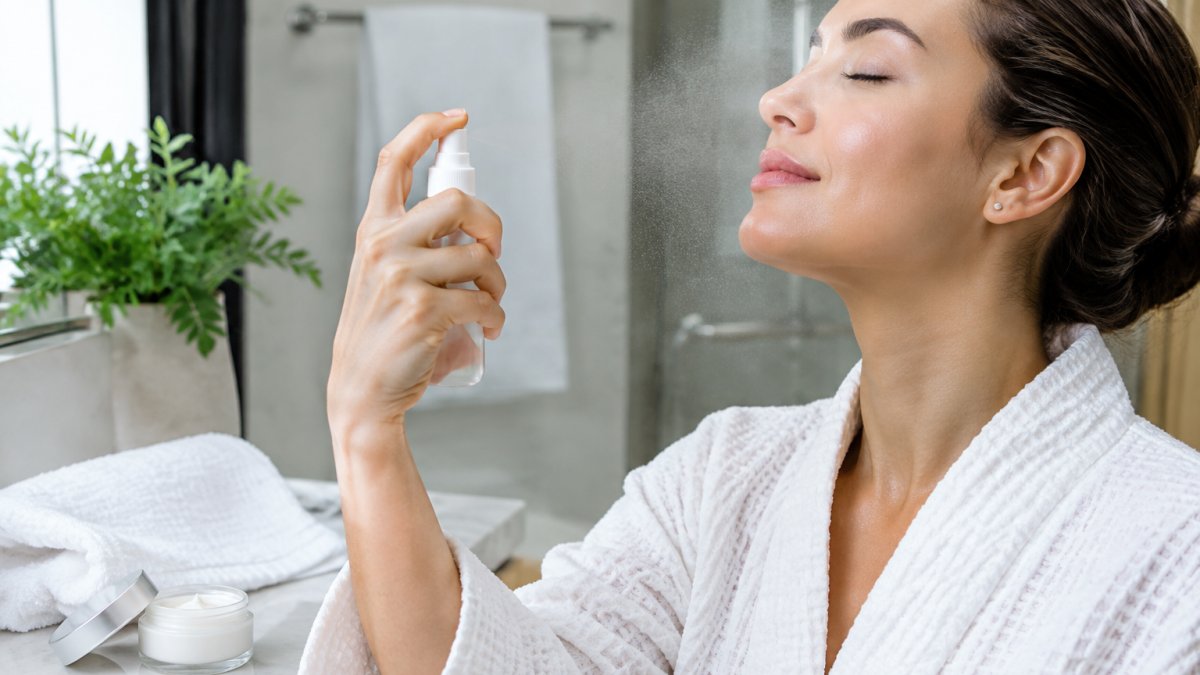
The steps we recommend:
- Cleanse or rinse skin first
- Pat partly dry, leaving skin damp
- Hold the bottle 15 to 20 centimetres from your face
- Close your eyes and mist in a slow sweep
- Let it air dry for a few seconds
- Follow with serum and moisturizer
Technique, Amount, and Letting It Dry
Two to three sweeps is enough for the whole face. More than that and you are wasting product and leaving skin wet. Hold the bottle at least 15 centimetres away so the mist lands as a fine layer, not droplets. If you see pooling water, you are too close.
Let the mist air dry for a few seconds before the next step. This gives the water time to settle into skin. Then apply moisturizer while skin still feels slightly damp.
Watch out: spraying so close that droplets pool on your face. That excess water evaporates and can leave skin feeling drier, not softer. Hold the bottle back and use a light layer.
Adjusting Technique for Skin Type and Climate
Skin type and climate change how much mist to use and how quickly to follow with moisturizer.
- Oily skin: Mist lightly, one or two sweeps, and choose a simple water-based formula. In humid weather, you may skip the midday mist if skin already feels comfortable. Over-misting can leave a tacky film.
- Dry or dehydrated skin: Mist more generously, two to three sweeps, and always follow with moisturizer while skin is damp. In dry indoor heating or cold weather, water evaporates faster, so the moisturizer step is essential. A humidifier in the room can also help.
- Sensitive skin: Patch-test first. Mist from further back to avoid concentrated droplets, and stop using any product that stings or turns skin red.
- Acne-prone skin: Keep the formula simple and avoid heavy or occlusive mists. Mist after cleansing and before a light moisturizer. Do not mist over active breakouts more than needed; a light layer is enough.
Climate matters too. In dry, heated indoor air, water evaporates faster. That makes the moisturizer step more important, not less. In humid climates, a mist may feel heavier, so use fewer sweeps and consider whether your skin needs it at all.
When Mist Can Leave Skin Feeling Drier
A mist can make skin feel drier in two cases. First, if you skip moisturizer and the water evaporates. Second, if the formula contains drying alcohol or astringents that strip moisture.
Check the label. A water-based mist with simple ingredients is less likely to cause this. Water-only sprays add water but do not hold it, so in dry environments they can evaporate.
Hygiene also matters. Keep the nozzle clean, wipe it occasionally, and avoid sharing bottles. Do not spray over dirty skin or after touching your face with unclean hands.
Choosing a Face Spray That Fits Your Routine
Choose a face spray based on what you want it to do: hydrate, refresh, or prep skin. Then check the formula for ingredients that suit your skin type. The biggest gap in most guides is formula differences: a humectant-rich mist, a soothing mist, and a simple water spray behave differently on skin and change where they fit in your routine.
Formula Differences That Change Application Order
- Humectant-rich mists: These contain ingredients like glycerin, hyaluronic acid, or other humectants that draw water toward the skin. They work best on damp skin before moisturizer, because the moisturizer helps hold the water in place. Applied after moisturizer, they can feel tacky and may not absorb as well.
- Soothing mists: Formulas with ingredients like aloe, chamomile, or oat extract are designed to calm the feel of skin. They can go before moisturizer as a prep step or after moisturizer for a refreshing layer. Read the label for direction.
- Simple water-based sprays: These are mostly water and maybe salt or minerals. They add a quick layer of moisture but do not hold it. They are best used before moisturizer, while skin is damp, so the moisturizer can seal in the water. Used alone, they can evaporate and leave skin feeling drier.
- Toner-like mists: These sit between cleansing and treatment. They may carry active ingredients and are usually applied after cleansing, before serum. Follow the label.
- Finishing mists: Designed to go last, often over makeup. They are not the same as hydrating mists and should not replace your moisturizer step.
Matching Formula to Skin Type and Climate
- Oily skin: Choose light, water-based mists without heavy oils. Humectant-rich formulas are fine if they are not too thick. In humid climates, you may not need a midday mist.
- Dry or dehydrated skin: Humectant-rich mists are a good fit, especially before moisturizer. In dry indoor heating, always follow with moisturizer to prevent evaporation.
- Sensitive skin: Look for fragrance-free, alcohol-free formulas with few ingredients. Soothing mists with aloe or oat can be helpful, but patch-test first.
- Acne-prone skin: Keep it simple. Avoid heavy or occlusive formulas. A light water-based mist before a non-comedogenic moisturizer is a safe pattern.
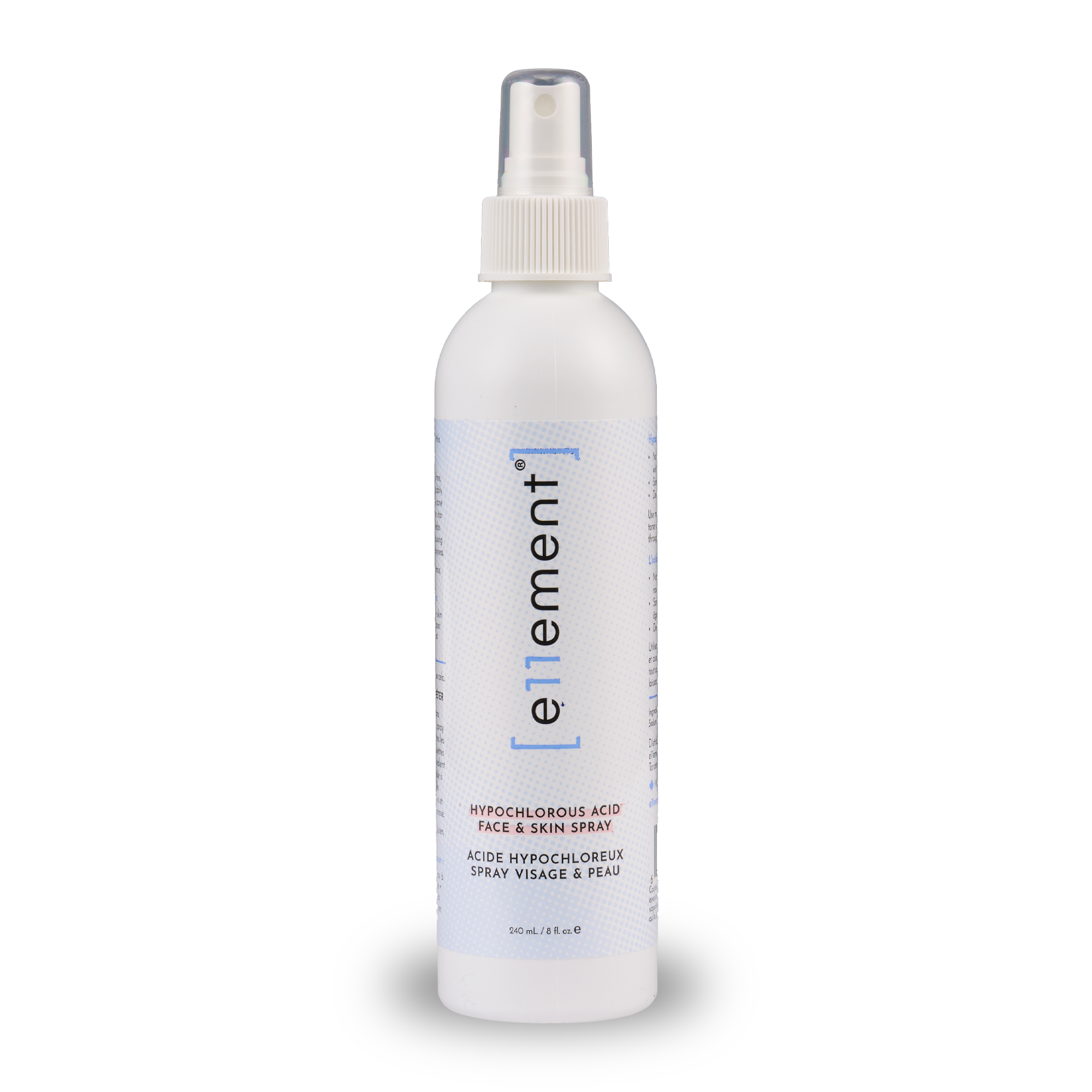
e11ement face sprays use water, salt, and hypochlorous acid at a pH of 7.5. They are alcohol-free and fragrance-free, and designed for daily skincare routines.
If you are deciding whether a hypochlorous acid spray can stand in for a face mist, our guide on whether HOCl spray can replace a face mist walks through the differences. When you are ready to try one, you can shop the Hypochlorous Acid Face and Skin Spray in a few sizes.
A quick way to pick:
| Your goal | Best spray type | When to apply |
|---|---|---|
| Add hydration before moisturizer | Water-based hydrating mist | On damp skin after cleansing |
| Refresh over makeup | Fine refreshing mist | Midday, light layer |
| Prep skin for serum | Toner-like mist | After cleansing, before serum |
| Post-workout reset | Light water-based spray | On clean skin, then moisturize |
For the full layering sequence, our guide on how to layer face spray with moisturizer breaks down the order step by step.
The order question has a simple answer, but the details decide the result. Mist on damp skin, follow with moisturizer, and use a light hand.
Frequently Asked Questions
Should you use face spray before or after moisturizer?
Most routines put face spray on after cleansing and before moisturizer, so the moisturizer sits on top and helps hold in the water you just added. That order suits hydrating, water-based mists. A mist can also go on after moisturizer when you want a quick refresh, and some products are labeled for use as a finishing step. Check the directions on your bottle and follow them.
Can you use face mist both before and after moisturizer?
Yes, and many people do. A light mist on clean skin before moisturizer adds a layer of water, then a second spritz later in the day refreshes skin without redoing your whole routine. Keep each application small, spray evenly, and let the mist air dry. If your skin starts to feel tight afterward, you likely need more moisturizer rather than more mist.
Should you apply serum before or after face mist?
It depends on the serum. Thin, water-based serums usually go on after a mist and before moisturizer, since damp skin helps them spread. Thicker creams and occlusive treatments go later in the order. If you use a face mist before or after serum, keep the mist water-based and let it dry first so the next product does not sit on a wet surface.
Can you spray your face over makeup?
Yes, a fine mist can go over makeup to refresh skin during the day. Hold the bottle further away than usual, spray evenly in a light pass, and let it air dry rather than rubbing. A powdery finish can look slightly less matte afterward, so use a small amount. Setting sprays are a separate product with a different job, so do not treat a skincare mist as a makeup fix.


