


Last Updated: October 23, 2026
Quick Summary
Yes, is hypochlorous acid safe for rosacea in general, with research showing good tolerability and no major adverse events reported. However, rosacea-specific evidence is limited, so it works best as a supportive product rather than a dedicated treatment. Start with a patch test and introduce it slowly to monitor your individual skin response.
- Hypochlorous acid is naturally produced by your immune system and typically formulated at 0.015% concentration in skincare products.
- A 2018 review found topical hypochlorous acid well tolerated with no major adverse events, but this research didn't focus specifically on rosacea.
- Patch test on your forearm for 24 hours before facial use, then start with 2-3 applications per week from 6 inches away.
- Apply after cleansing on clean skin, let air dry 30-60 seconds, then layer with lightweight moisturizer and sunscreen.
- Stop use and consult a dermatologist if you experience burning lasting over 5 minutes, increasing redness, or worsening flushing after 1-2 weeks.
Table of Contents
- What You Need to Know About Hypochlorous Acid and Rosacea Safety
- Hypochlorous Acid Side Effects: What the Research Shows
- How to Use Hypochlorous Acid Spray Safely With Rosacea
- Building a Rosacea Skincare Routine With Hypochlorous Acid Spray
- Hypochlorous Acid Spray for Rosacea: When to Seek Medical Advice
- Product Formulation and Label Checks
- Frequently Asked Questions
What You Need to Know About Hypochlorous Acid and Rosacea Safety
If you have rosacea, you've probably tried dozens of products promising relief. Many of them make things worse.
The honest answer is more nuanced than a simple yes or no. Hypochlorous acid (HOCl) is a naturally occurring compound that your body actually produces to fight infection. It shows up in dermatology discussions because it's well-tolerated in general use.
This guide walks you through what the research actually shows, how to test it safely on your own skin, and whether it makes sense to add it to your routine.
What Hypochlorous Acid Is
Hypochlorous acid is a chemical compound your immune system naturally produces. When your white blood cells encounter bacteria or other threats, they create HOCl to neutralize them.
e11ement's hypochlorous acid spray is formulated from simple ingredients: water, salt, and hypochlorous acid. There's no alcohol, no added fragrance, no parabens. This simplicity matters for rosacea-prone skin, which reacts badly to common irritants.

The compound has been used in medical settings for decades. Hospitals use it to clean wounds. Veterinarians use it on animal skin conditions. But its rise in consumer skincare is relatively recent, which is partly why rosacea-specific evidence lags behind general safety claims.
How It Works on Skin
Hypochlorous acid works through two main mechanisms: antimicrobial action and gentle inflammation support.
First, it targets bacteria and microbes on the skin surface. This is why it's often discussed for acne-prone or breakout-prone skin. The antimicrobial effect happens quickly, within minutes of application.
Second, it appears to support the skin barrier without aggressive stripping. Unlike harsh cleansers or strong actives, HOCl doesn't disrupt the skin's natural pH or damage the protective lipid layer. For rosacea, which involves a compromised skin barrier, this matters.
The mechanism is mechanistically plausible for rosacea, but here's the catch: plausibility isn't the same as proven effectiveness. A 2024 dermatology review characterizes topical hypochlorous acid as relatively safe and potentially useful in managing infection-related skin concerns, but it doesn't establish rosacea-specific clinical benefit. Dermatology Times reports that dedicated evidence for rosacea remains limited, despite mechanistic plausibility for inflammatory skin conditions.
Hypochlorous Acid Side Effects: What the Research Shows
Before you spray anything on rosacea-prone skin, you need to know what can actually go wrong. The research here is reassuring in some ways and incomplete in others.
General Tolerability and Adverse Events
A comprehensive 2018 review examined topical hypochlorous acid safety across available literature. The finding: topical hypochlorous acid appeared well tolerated and safe, with no major adverse events reported in the literature reviewed. This is the strongest safety signal in the research.
No serious reactions. No hospitalizations. No permanent damage.
But there's a critical caveat: that review didn't focus on rosacea. It looked at general tolerability across skin conditions. The National Rosacea Society is explicit about this distinction.
Minor irritation is possible. Some users report temporary redness or stinging, especially on first application. These reactions typically resolve within minutes.
Rosacea-Specific Concerns and Evidence Gaps
Here's where the picture gets less clear. The research on hypochlorous acid for rosacea specifically is sparse. Most discussion happens in dermatology forums and social media, not clinical trials.
One Reddit post in r/Rosacea describes a user's reported improvement in irritation and flushing with type 1 rosacea. One person's experience is not clinical evidence. It's a data point, but not proof.
The real issue is that rosacea involves vascular instability, not just bacterial infection. Your blood vessels overreact to triggers.
This doesn't mean it won't help. It means you shouldn't expect it to be a rosacea treatment.
How to Use Hypochlorous Acid Spray Safely With Rosacea
If you decide to try it, the method matters more than the product. Rosacea skin is reactive. You need a deliberate introduction plan, not just spraying and hoping.
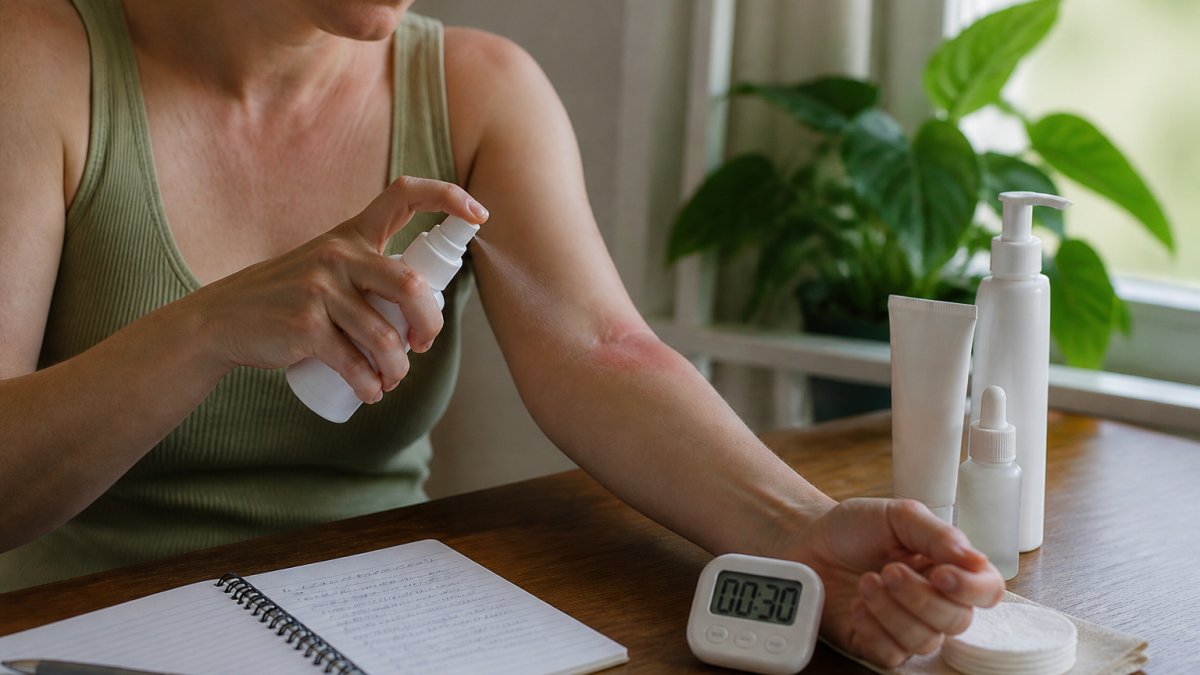
Step 1: Patch Test Before Full Application
Start small. This is non-negotiable for rosacea.
Choose a discrete area, the inside of your forearm or behind your ear works well. Spray a light mist and let it air dry completely. Wait 24 hours. Check for redness, stinging, or any unusual response.
If your skin tolerates it, move to a slightly larger test area on your face, perhaps a small section of your cheek. Apply the same way: light mist, air dry, wait 24 hours.
Most people tolerate hypochlorous acid without issue. But rosacea is unpredictable. A 24-hour patch test catches problems before they spread across your entire face.
Step 2: Start With Frequency and Distance
Once patch testing passes, introduce it slowly into your routine.
Start with 2-3 times per week, not daily. Spray from about 6 inches away, not directly on the skin. This creates a fine mist rather than a concentrated stream.
Apply after cleansing, on completely clean skin. Let it air dry for 30-60 seconds before applying other products. This prevents layering irritants and gives the HOCl time to work.
After one week at 2-3 times per week, you can increase to daily use if your skin feels good. But "good" means no new flushing, no increased sensitivity, no persistent stinging.
Hypochlorous Acid Spray for Face and Skin - 240mL / 8oz →
Step 3: Monitor Your Skin Response
Keep a simple log for two weeks. Note:

- Redness level (1-10 scale)
- Flushing episodes
- Stinging or burning sensations
- Overall skin comfort
Track this even if your skin feels fine. Rosacea patterns are subtle. You might not notice improvement or irritation without written reference.
If redness increases or flushing worsens, stop use for three days. Then try again at a lower frequency, once per week instead of daily. If problems persist, discontinue and consult your dermatologist.
Building a Rosacea Skincare Routine With Hypochlorous Acid Spray
Hypochlorous acid spray works best as part of a thoughtful routine, not as a standalone product. The sequencing and what you layer around it matters.
Sequencing and Layering With Other Products
Apply hypochlorous acid spray after cleansing and before heavier products.
Here's a practical order:
- Gentle cleanser (lukewarm water, minimal surfactant)
- Hypochlorous acid spray (light mist, air dry 30-60 seconds)
- Lightweight moisturizer (hydrating, barrier-supporting)
- Sunscreen (if morning routine; SPF 30+ is critical for rosacea)
The spray works best on clean, damp skin. It penetrates better and doesn't trap bacteria under heavier products.
If you use other actives, retinoids, acids, vitamin C, apply those on different days. Rosacea skin can't tolerate multiple actives simultaneously. Hypochlorous acid is gentle, but it's still a change to your barrier.
e11ement's standard 240mL spray works well for daily facial use. If you're using it on larger areas, post-workout body skin, hands, the refill sizes offer better value.

Ocular Rosacea and Eye-Area Precautions
Ocular rosacea affects the eyes and eyelids. If you have this subtype, you need extra caution.
Never spray hypochlorous acid directly near the eyes. The spray can drift into the eye area, and even gentle products can irritate the delicate eye mucosa.
If you want to address rosacea symptoms around the eyes, apply the spray to a clean cotton pad first. Then gently dab, don't spray, around the orbital bone, staying well away from the lash line and eye itself.
Better yet, discuss ocular rosacea with your dermatologist before using any new product near the eyes. Prescription treatments often work better for this subtype than over-the-counter sprays.
Hypochlorous Acid Spray for Rosacea: When to Seek Medical Advice
Hypochlorous acid is well-tolerated, but rosacea is complex. Certain situations require professional guidance.
Red Flags That Require Dermatologist Consultation
Stop using the product and contact your dermatologist if you experience:
- Persistent burning or stinging that doesn't resolve within 5 minutes of application
- Increasing redness or flushing severity after 1-2 weeks of use
- New pustules, papules, or worsening acne alongside rosacea symptoms
- Swelling or hives
- Eye irritation if you have ocular rosacea
These aren't necessarily signs that hypochlorous acid is dangerous. They're signs that it's not right for your particular rosacea presentation at this time.
Using Hypochlorous Acid Alongside Prescribed Treatments
If your dermatologist has prescribed metronidazole, azelaic acid, or oral medications for rosacea, you can typically use hypochlorous acid spray alongside them. These treatments work through different mechanisms and don't directly interact.
But ask first. Your dermatologist knows your skin history and current treatment plan. They can confirm whether adding a spray makes sense or whether it might complicate your treatment.
If you're using prescription-strength treatments, you might not need the spray at all. Don't assume you need to stack products. Sometimes less is more with rosacea.
Product Formulation and Label Checks
Not all hypochlorous acid products are created equal. When you're evaluating options, here's what to check:
Concentration: Look for 0.01-0.015% HOCl. This is the therapeutic range. Higher concentrations aren't necessarily better and may increase irritation risk.
Additives: Avoid products with alcohol, fragrance, dyes, or essential oils.
Packaging: Hypochlorous acid is sensitive to light and air. It should come in an opaque bottle or spray bottle that minimizes exposure. Check the expiration date.
Price: Hypochlorous acid products range from $12 to $50. e11ement's 60mL spray is $12.49, the 120mL is $15.99, and the 240mL is $18.95.
The bottom line: Is hypochlorous acid safe for rosacea? Yes, in general. The research shows good tolerability and no major adverse events.
e11ement's hypochlorous acid spray is formulated specifically for sensitive skin, with no irritating additives. It's designed to refresh and support your skin barrier.
Frequently Asked Questions
Is hypochlorous acid safe for rosacea-prone skin?
Topical hypochlorous acid appears well tolerated with no major adverse events reported in clinical reviews. However, dedicated research specifically for rosacea remains limited. The National Rosacea Society notes that products with its Seal of Acceptance do not guarantee improvement for every individual. If you have rosacea, patch test first on a small area, start with infrequent use, and consult your dermatologist before adding it to your routine, especially if you use prescription rosacea treatments.
What are the most common hypochlorous acid side effects?
In general use, hypochlorous acid is non-irritating and non-toxic for most skin types. Discontinue use and consult a dermatologist if you develop persistent redness, swelling, or signs of an allergic reaction.
How often can I use hypochlorous acid spray if I have rosacea?
Start conservatively: once daily after cleansing, allow it to air dry, then apply your regular moisturizer. After 1-2 weeks without irritation, you may increase to twice daily if desired. Frequency depends on your skin's tolerance and your dermatologist's guidance. Many people find once daily sufficient for maintenance. Never use it more than twice daily without professional advice, and stop immediately if redness or irritation worsens.
Can hypochlorous acid make rosacea worse?
However, individual skin varies significantly. Some rosacea-prone individuals may experience temporary flushing or irritation if they apply it too frequently, use it on already inflamed skin, or have an underlying sensitivity to the formulation. Always patch test first, introduce it slowly, and stop if you notice increased redness, burning, or stinging. Your dermatologist can help determine if it's right for your specific rosacea type.


